
Indoor air quality plays a huge role in your health, comfort and even the durability of your home. But how exactly does the system work?
The overview
A ventilation system works a bit like the lungs of your house. Stale air is continuously removed from inside, while fresh, filtered air is brought in from outside. The goal is to maintain a steady exchange so the indoor environment stays healthy, comfortable, and free from excess humidity or pollutants.
If you’re interested, here’s a quick overview of different systems.
The basic components
While ventilation systems vary dramatically in complexity, the basics are mostly the same.
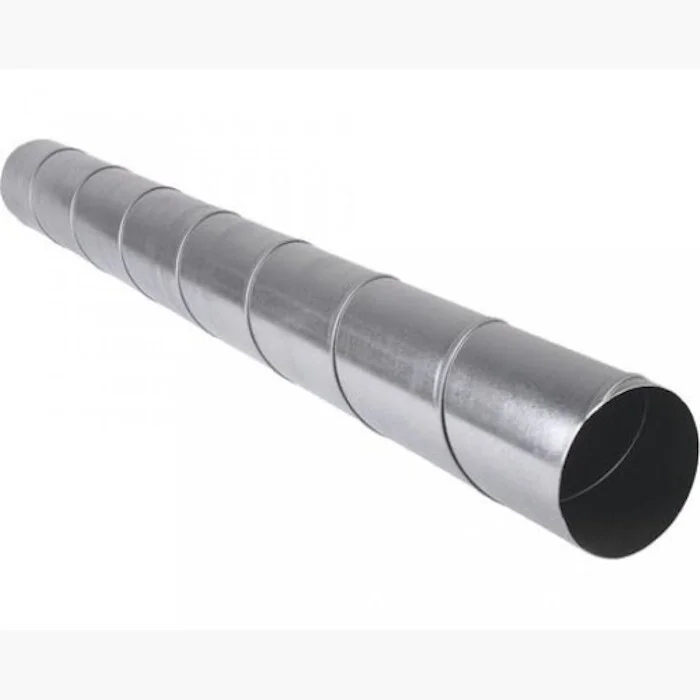
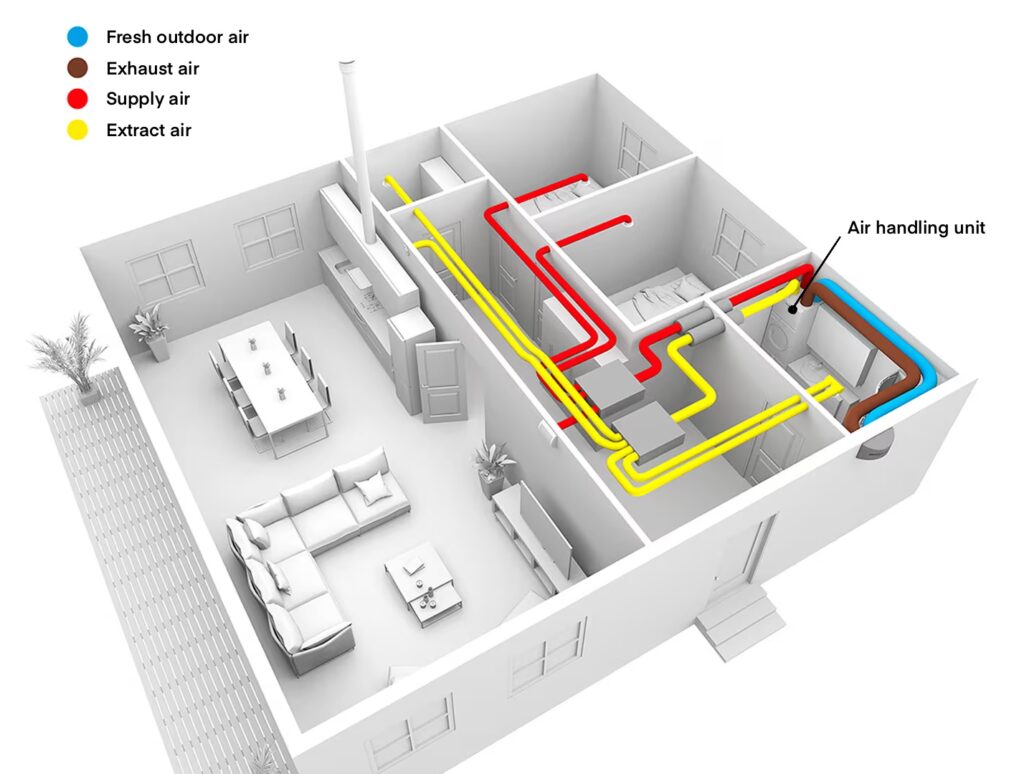
The ductwork: Carry air to and from the living spaces. Bring fresh air to clean spaces (livingroom, dining room, bedrooms) and take air from less clean rooms (bathroom, WC, kitchen).
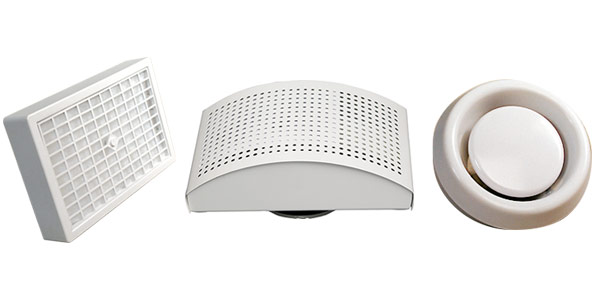
Terminal devices: They are the adjustable parts between the surrounding air and the ducts. The terminal devices are adjusted to the specific air volume described in the ventilation design drawings.
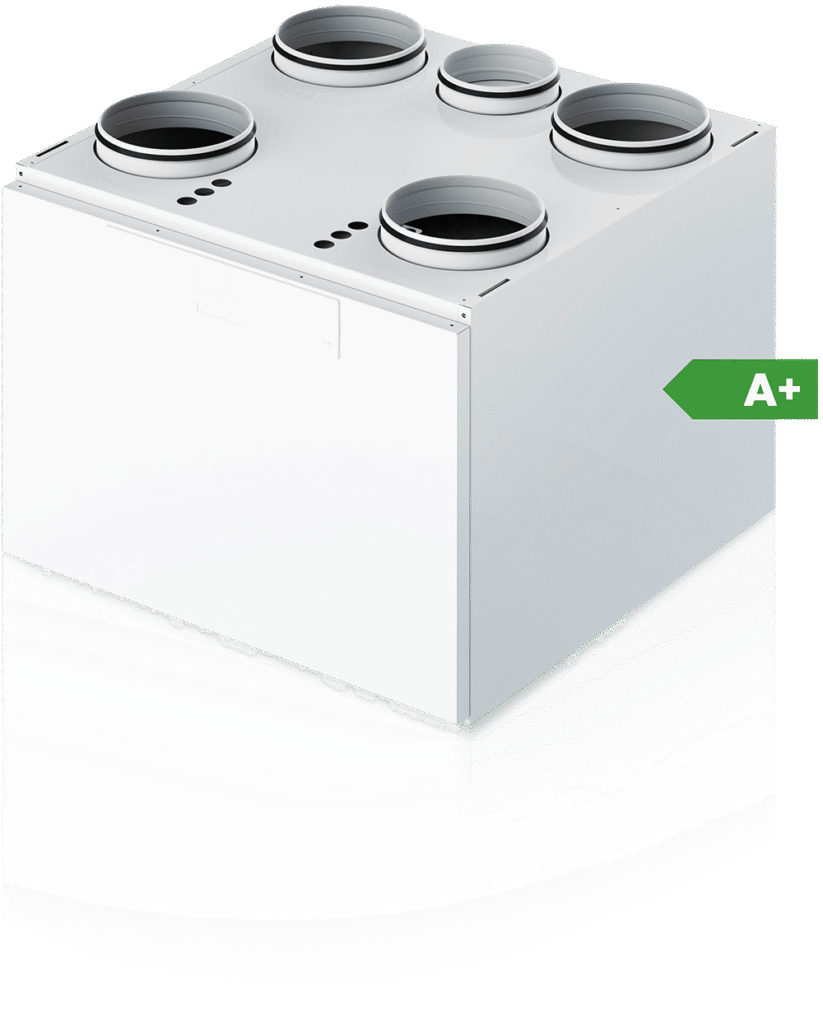
Air handling unit: AHU is a device designed to move air to and from the house while filtering it, heating and/or cooling it and keeping the heat from escaping with the extract air. The air handling unit has built in fans, filters, heating coil and a heat recovery unit. It also has its own control system to sometimes measure and then adjust the AHU.
How Air Moves Through the System
- Fresh Air Intake: Outside air enters the system through an intake grille, usually placed away from pollution sources (like busy roads or chimneys).
- Filtration: The air passes through one or more filters that capture dust, pollen, and other particles.
- Air Distribution: Fans push the filtered air through ducts and into supply vents located in living areas and bedrooms.
- Extraction: At the same time, extract vents in bathrooms, kitchens, and utility rooms pull out moist, stale air.
- Heat Recovery: The outgoing air passes through a heat exchanger. Heat is transferred to the incoming fresh air, keeping your home warm without wasting energy. (Here’s a quick overview)
- Exhaust: Finally, the stale air is expelled outside, completing the cycle.
Picture: Vallox
Why Balance Matters
Usually In a well-designed system, the amount of air coming in equals the amount going out. This ensures your home isn’t under pressure (which could draw in unfiltered air and moisture through structural components). How ever this is not always the case. Sometimes houses need to be designed for negative or even positive pressure. This is why you should always hire an engineer to do the ventilation design before installing the system.
The Benefits for Homeowners
- Healthier Air: Filters remove pollen, dust, and outdoor pollution (small particles).
- Moisture Control: Extracting humid air prevents mold and dampness.
- Energy Savings: Heat recovery systems reduce heating costs.
- Comfort: Even air distribution avoids stuffy or drafty rooms.
Maintenance: What You Need to Do
Like any system, ventilation needs some care:
- Replace or clean filters regularly (typically every 6 months).
- Keep intake and exhaust grilles free from obstructions and dust.
- Have the ducts and fans inspected periodically to maintain efficiency.
Good to know
In addition to the technology discussed in this article the ventilation system can accomplish multiple additional feats.
For example
If the heat recovery unit is a specific kind, in addition to heat also moisture can be recovered from the indoor air. This is especially important in arctic conditions. ERV’s are such air handling units. Though any AHU can achieve this if the heat recovery unit has the needed regenerative technology.
The system can also add moisture to the supply air to keep indoor air at a specific humidity. And so on…
In Summary
A domestic ventilation system quietly works in the background, constantly refreshing your indoor air. By combining fans, ducts, filters, and heat recovery, it ensures your home stays healthy, comfortable, and energy-efficient. With just a little routine maintenance, your ventilation system can keep your indoor climate in top shape for years to come.
Until next time…
Share this article